
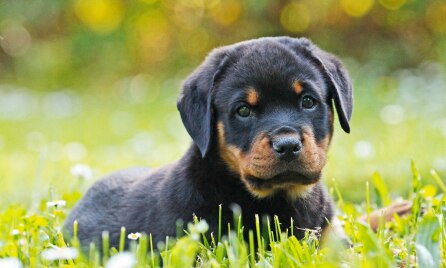
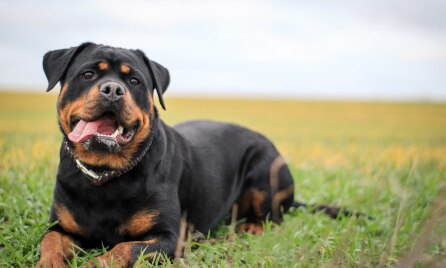
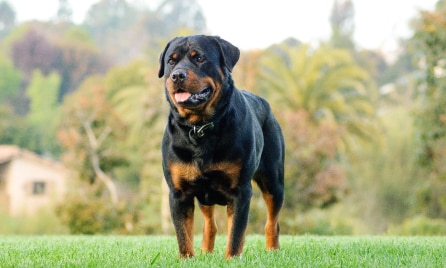

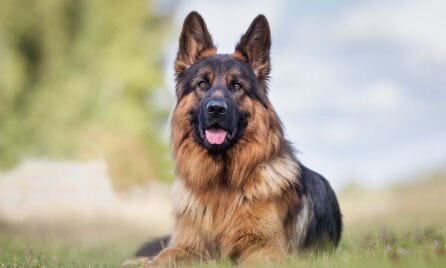
Information about Rottweilers.

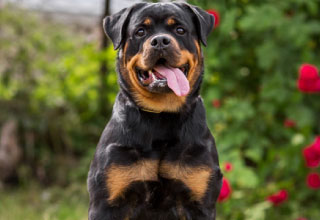
Rottweilers tend to be a protective breed and a loyal, affectionate fur friend. Originally from Germany, the Rottweiler (or Rottie) was bred as a herding dog, with historians believing that they’re descended from cattle-driving dogs left by the Roman legions in Rottweil, Germany (hence the breed name). These working dogs were used to pull carts for butchers. They were among the earliest police dogs because of their intelligence and instinct for wariness and protectiveness.

Read our guide below to see if Rottweilers are the pet for you.

Rottweiler breed information.

If you’d like to get to know the breed a little more closely, here are a few key traits and facts about the Rottweiler:

How long do Rottweilers live?

Purebred Rottweilers have an average lifespan of about 8-10 years, while Rottie-crosses generally have a life expectancy of 10-12 years. It is also an important note that females may outlive males by about nine months on average.

How big do Rottweilers get?

Rottweilers fit into the medium-to-large or large families of dog breeds. In terms of size, male Rotties can get bigger and heavier than females. Males' height ranges from 61-69cm, while females range from 56-63cm. On the other hand, males’ weight range from 50-60kg, while females range from 35-48kg.

Do Rottweilers shed?

Rottweilers tend to shed a bit throughout the year and usually shed more heavily twice a year (spring and autumn). They have a double coat, and will shed their outer coat of fur to prepare for the changing weather.

Should I get a Rottweiler?

First-time dog owners might be hesitant to get a Rottweiler, as they tend to need a lot of attention and socialisation to be a great family companion.

While other dogs as big as Rottweilers are happy being outside dogs, Rottweilers usually love being indoor dogs.

Rotties tend to have guard dog instincts and can very protective, being a good companion for families and kids.

Should I get a Rottweiler?

Set your dog up for success!

Finding the right dog trainer can make all the difference. Learn what to look for to ensure the best fit for your pup!

PetRescue

Rottweiler personality.

Rottweilers are known to be calm, confident, courageous, intelligent, and protective. Rotties can be pretty intimidating because of their size and their natural guard dog instincts, but they also tend to want attention from their humans.

Taking care of a Rottweiler.

Grooming.

With naturally short hair, Rotties’ grooming needs can be a very smooth process. You can brush their coat once a week using a soft-bristled brush, but make sure you don’t over-brush. They are active dogs that love to play around, so it’s important to regularly check their paws for any signs of damage. Depending on their daily or weekly activities, you can bathe your Rottie every 2 to 5 weeks to keep their coat smooth and healthy.

Exercise.

Rottweilers usually require lots of exercise to keep them thriving and to use up their energy. Ideally, you should take your Rottie puppy for a walk for 30 mins daily. As they get older, you can take them with you during long walks and other physical activities to keep their body and mind sharp and active.

Diet.

One of the most important factors a pet owner should consider is their pet’s diet, as it differs depending on the specific needs and preferences of each breed.

Rottweilers generally need a well-balanced diet because of their rapid growth. There is a wide variety of food choices available to purchase for your Rottweiler. As this matter involves the health and well-being of your adorable pet, it is best to consult your veterinarian for the best recommendation of food that best suits your Rottie’s size and age (puppy, adult , senior).

Common Rottweiler health conditions.

Like most dog breeds, Rottweilers are susceptible to certain health conditions. Here are some examples:

Hip dysplasia.

Hip dysplasia is a hereditary skeletal condition generally seen in medium to large dog breeds. The condition creates a deformity in a dog’s hips as they grow, leading to reduced mobility and range of motion. Early signs of hip dysplasia in a dog can be limping, abnormal walking patterns, and loss of muscle in the hind legs.

Hip Dysplasia

Sub-aortic stenosis.

Sub-aortic stenosis, or simply SAS, is a common congenital heart defect for large dog breeds like Rottweilers. It consists of abnormal tissue located just below the aortic valve, obstructing the heart from properly pumping blood around the body. This health problem may require medication and surgery.

Sub-Aortic Stenosis

The cost of insuring a Rottweiler.

If you’re thinking about getting pet insurance for your Rottweiler, factors like age and location could affect the cost of your premium. Everyday Pet Insurance offers cover with optional benefits to help protect you and your furry friend. Learn more about the benefits of Everyday Pet Insurance here.

Need Pet Insurance for your Rottweiler?

Why pick Everyday Pet Insurance?

Choose your annual benefit limit up to $7.5k, $12.5k, $24k or $35k.#

Get up to 70%, 80% or 90% back on eligible vet bills.#


We process 90% of claims within just 1 day.»~


Claim on the spot & only pay the gap with GapOnly.®=
 

Related articles.

Important Information.

text

# Depending on your level of cover. Policy T&Cs, limits, exclusions, waiting periods and annual excess may apply.
text

>> Once all required claims documentation has been received.

Based on PetSure data February 2023 to January 2024.

text

= The gap is defined as the difference between the vet's invoice and the claim benefit under your policy. Policy terms and conditions apply. GapOnly® is only available at participating Vets. Please visit GapOnly® to search for GapOnly® enabled vets. GapOnly® is a trademark owned by PetSure (Australia) Pty Ltd (PetSure) (ABN 95 075 949 923, AFSL 420183).