









- text
-
° This offer is only available for policyholders who have a registered Everyday Rewards Card linked to their eligible active Everyday Insurance policy. This offer is limited to one in-store Woolworths Supermarket transaction up to $500, with a maximum saving of $50 per Everyday Rewards Card, per month, regardless of the number of Woolworths services you use. For full T&Cs click here.
Flea and Tick Treatment for Dogs: A Complete Guide
Practical tips to keep your pet safe.
Pet Insurance | 10 minute read | 27 August 2025
- Practical tips to keep your pet safe.
- Flea vs tick signs at a glance
- Signs and symptoms of ticks in dogs
- Signs and symptoms of fleas in dogs
- Flea treatment options for dogs
- Tick treatment options for dogs
- How do I know what flea and tick treatment is right for my dog?
- Protecting your dog with Everyday Pet Insurance
- Frequently asked questions
You notice your dog scratching more than usual. Then comes the frantic head shake. They're gnawing at their back leg. They keep stopping mid-walk to bite at something you can't see. Uh oh.
Fleas and ticks are incredibly common in Australian dogs, and there are plenty of effective treatment options available. The sooner you identify what's going on, the sooner your dog can get some relief.
This guide covers the signs and symptoms of fleas or ticks in dogs, the full range of flea and tick treatment for dogs, and how to work out which approach might be right for your pooch.
Flea vs tick signs at a glance
Not sure which parasite you're dealing with? This table can help narrow it down.
| Potential Sign | Fleas | Ticks |
|---|---|---|
| Scratching / itching | Yes, persistent | Localised, around bite site |
| Visible pest on fur | Small dark specks (flea dirt) |
Swollen, embedded parasite |
| Skin irritation / redness | Common, especially belly/groin |
Around bite area |
| Hair loss | Yes, from scratching |
Uncommon |
| Lethargy / weakness | In severe infestations |
Common tick reaction symptom |
| Loss of coordination | No |
Yes, tick paralysis symptom |
| Fever | Possible in severe cases |
Yes, common |
| Vomiting | Rare |
Possible in tick toxicity |
If you're unsure, the safest option is always to speak to a vet. Everyday Pet Insurance policyholders have 24/7 access to licensed Australian vets via video or online chat via VetAssist.†
Signs and symptoms of ticks in dogs
Ticks are small, blood-sucking parasites that attach to your dog's skin and can cause serious health issues if left untreated. In Australia, the paralysis tick (Ixodes holocyclus) is the species of most concern, found mainly along the eastern seaboard. Knowing what a tick looks like on a dog and understanding tick reaction in dogs can help you act fast if your dog picks one up.
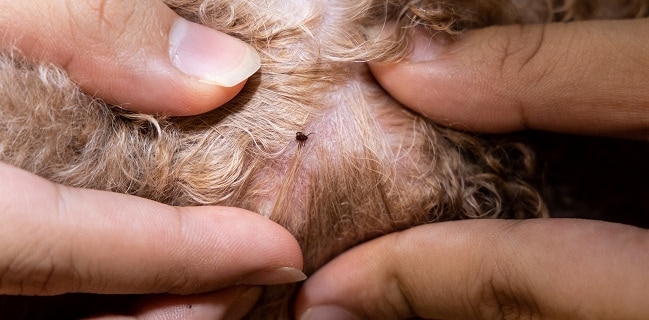
What does a tick look like on a dog?
Before feeding, ticks are small and dark, roughly the size of a sesame seed. After feeding on blood, they swell to the size of a small grape and take on a grey or blue-grey colour. They're most commonly found around the head, neck, ears, and between the toes, so these are the first places to check.
Tick symptoms in dogs
The signs can be subtle at first, which is why it helps to know what you're looking for. Common tick symptoms in dogs and signs of tick bite in dogs include:
Lethargy or unusual weakness
Loss of coordination or wobbling
Changes in voice or bark
Difficulty breathing or swallowing
Vomiting or regurgitation
Excessive drooling
Partial or complete paralysis, starting in the hind legs

If your dog shows any of these signs, contact your vet immediately. Tick paralysis can progress quickly and can be life-threatening without treatment.
Tick reaction in dogs
Reactions vary depending on the species and how long the tick has been attached. Paralysis tick reactions typically appear two to seven days after attachment and worsen as the toxin spreads through the nervous system. Even after the tick is removed, symptoms can continue to progress for 24 to 48 hours, so keep your vet in the loop.
Signs and symptoms of fleas in dogs
Fleas are fast-moving and hard to spot, but the signs they leave behind are easier to catch. A single flea can bite your dog hundreds of times a day, and for dogs with a flea allergy (known as flea allergy dermatitis), even one bite can trigger a significant skin reaction.

Signs and symptoms of fleas in dogs
Common signs and symptoms of fleas in dogs include:
Persistent scratching, biting, or licking, particularly around the base of the tail, belly, and groin
Red, irritated, or scabby skin
Hair loss from repeated scratching
Restlessness or agitation
Pale gums in severe infestations (from anaemia, especially in puppies)
What do flea bites look like on dogs?
Flea bites appear as small, red raised bumps, often in clusters or lines. What do flea bites look like on dogs with a flea allergy? The reaction can include widespread redness, crusting, and hair loss beyond the bite sites. Bites are most common in the groin, belly and inner thighs.
Can dog fleas stay on humans?
Bad news if you're also itching: dog fleas can stay on humans long enough to bite, typically around the ankles and lower legs, but they don't actually live on people. They typically prefer animal hosts and will return to your pet (or your carpet, bedding, and soft furnishings) rather than setting up on a person. If your dog has fleas, treating your home is just as important as treating your dog.
Flea treatment options for dogs
There's a wide range of treatment options for dogs with fleas available, and the right option depends on your dog's size, age, lifestyle, and health. Here's a breakdown of the main approaches. It’s important to always check with your vet which approach is best for your pup.
| Treatment type | How it works | Benefits | Considerations |
|---|---|---|---|
| Topical spot-on | Applied to skin between shoulder blades | Typically fast-acting, monthly application | Can wash off; avoid contact until dry |
| Oral chews / tablets | Ingested; kills fleas via bloodstream |
Waterproof; no residue on coat |
Prescription required for some products |
| Flea collars | Releases insecticide over time |
Typically long-lasting (up to 8 months) |
Fit must be checked regularly |
| Flea shampoo | Kills fleas on contact during wash |
Often has an immediate effect |
No ongoing protection |
| Natural / home treatments | Essential oils, diatomaceous earth, vinegar rinses |
No chemicals |
Variable effectiveness, some un-tested options could be toxic to dogs |
| Environmental treatment | Sprays and bombs for home |
Kills eggs and larvae in environment if done accurately |
Must treat home and pet simultaneously |
Flea and worm treatment for dogs
Flea and worm treatments for dogs can often be combined into a single product, which can simplify your overall parasite prevention routine. Combination treatments typically cover fleas, intestinal worms, and sometimes heartworm and ticks in one monthly dose. Ask your vet which combination product suits your dog's size and lifestyle.
Natural flea treatment for dogs
There are several opinions about natural flea remedies. Some may work to a degree; some may also be toxic to dogs. Options like diatomaceous earth (food-grade only), diluted apple cider vinegar sprays, and certain essential oil-based repellents can help deter fleas, but tend to be less effective than veterinary-grade products for active infestations. Some essential oils, including tea tree oil, are toxic to dogs, so always check with your vet before trying any natural flea treatment for dogs.
Home flea treatment for dogs
Treating your home is just as important as treating your dog. Up to 95% of a flea infestation lives in the environment (eggs, larvae, and pupae in carpet, bedding, and soft furnishings), not on your pet. Wash bedding in hot water, vacuum thoroughly and frequently, and use an appropriate household flea spray or bomb to break the lifecycle. For home flea dog treatments to work, you need to tackle both at the same time.
Tick treatment options for dogs
Tick prevention requires a different approach to flea control. The paralysis tick in particular demands prompt action, and preventative treatment is far easier than managing a reaction.
How to remove a tick from a dog
Knowing how to remove a tick from a dog safely can make a real difference. Use a tick twister or fine-tipped tweezers and grip the tick as close to the skin as possible. Turn anti-clockwise and pull upward with steady, even pressure. Don't crush, or apply substances like petroleum jelly or nail polish before removal, as this can cause the tick to inject more toxins. After removal, monitor your dog closely and contact your vet if you're still concerned. If your dog is already showing symptoms, do not attempt to remove the tick yourself. Get to a vet immediately.
Tick prevention treatments
Preventative tick treatment is one of the most effective forms of protection. Options include:
Chewable tick prevention tablets (monthly or three-monthly) that work through the bloodstream to kill ticks on contact.
Topical spot-on treatments that repel and kill ticks for up to a month.
Tick collars that release a protective compound across the coat over several months.
No single treatment is 100% effective, so it's recommended to combine preventative products with daily tick checks, especially during tick season (spring and summer) and after walks in bush or long-grass areas.

How do I know what flea and tick treatment is right for my dog?
Six types of treatment, one dog, and a vet bill you'd rather avoid: it's a lot to weigh up. A few key considerations can help narrow it down:
Age and weight. Many treatments have minimum age and weight requirements. Puppies and senior dogs may need specific products.
Lifestyle. Dogs that swim regularly need a waterproof treatment. Dogs in tick-prone areas need dedicated tick prevention, not just flea control.
Health status. Some treatments aren't suitable for pregnant, nursing, or dogs with immune conditions. Always disclose your dog's health history with your vet.
Convenience. Monthly chewables are easy to administer. Long-acting collars suit owners who prefer a set-and-forget approach.
Cost. Combination products can offer better value by covering multiple parasites in one. Compare the per-month cost rather than the upfront price.
If you're not sure what's right for your dog, your local vet is the best person to ask. They can recommend the most suitable flea and tick treatment for dogs based on your dog's specific breed, size, age, and where you live.
Protecting your dog with Everyday Pet Insurance
Vet bills from a serious tick reaction or a skin infection can catch you off guard. Everyday Pet Insurance can help cover the cost of eligible vet treatments when unexpected things happen, so you can focus on getting your dog better rather than worrying about the bill. While eligible treatments for unexpected reactions are covered, routine preventative treatments—such as flea, tick, and worm control—are generally excluded.
There are also two optional add-ons worth knowing about:
Routine Care (non-insurance benefit): covers up to $120 per year towards preventative items, including flea, tick, and worm treatment products.
Booster Care: Covers up to $2,000 per year for specified dental conditions and specialised therapies, such as physiotherapy or behavioural treatments.v
Both are available as optional extras across all levels of cover.
Frequently asked questions
There's no single answer. It depends on your pet's age, size, lifestyle, and health. Veterinary-grade topical spot-ons, oral chews, and combination parasite prevention products are generally more effective than over-the-counter alternatives. Your vet can recommend the right product for your dog.
Consistent, year-round treatment with a veterinary-recommended product can be generally the most effective approach. Combining a monthly spot-on or oral chew with regular home treatment (vacuuming, washing bedding) and an environmental spray can help break the flea lifecycle and prevent reinfestation.
Start with an appropriate flea treatment for dogs (spot-on, oral chew, or shampoo), then tackle the environment at the same time: wash all bedding in hot water, vacuum carpets and soft furnishings thoroughly, and apply a household flea spray. Repeat treatment as directed, and continue monthly prevention to stop fleas returning.
Most veterinary-grade flea treatments are generally considered safe when used as directed and appropriate for your dog's age and weight. Side effects are uncommon but can include mild skin irritation at the application site. Always read the label carefully, and speak to your vet if your dog has a known sensitivity or health condition.
Using out-of-date treatments might not be a safe approach. Products past their expiry date may have degraded in potency and could be less effective or, in some cases, cause skin irritation. Check the expiry date before applying any treatment, and replace products that have passed it.
Dog fleas can bite humans, typically around the ankles and lower legs, but they don't live on people. They need an animal host and will return to your pet or the home environment. If you're noticing bites, treat both your dog and your home to eliminate the infestation at the source.
Other articles you might like
Help protect your loyal companion with Everyday Insurance and get 10% off an in-store Woolworths shop every month°
- text
-
v Booster Care limit, applicable benefit percentage, waiting periods and exclusions apply. Annual excess may apply. See details in your PDS.
- text
-
† Offer available to new Everyday Pet Insurance policyholders, and is limited to 1 membership per eligible policy. The free membership offer (valued at $199p.a) is from the date of your policy commencement, provided your Everyday Pet Insurance policy remains active. You are not eligible to redeem the free membership subscription for cash or credit. VetAssist is a separate subscription based service to the Everyday Pet Insurance product, and is provided independently by Everyday Insurance third party service provider, VetChat Services Pty Ltd (VetChat). Click here for full VetAssist Service terms and conditions. Everyday Insurance reserves the right to vary or remove this offer at any time and will provide reasonable notice of any such changes.
- text
-
= The gap is defined as the difference between the vet's invoice and the claim benefit under your policy. Policy terms and conditions apply. GapOnly® is only available at participating Vets. Please visit GapOnly® to search for GapOnly® enabled vets. GapOnly® is a trademark owned by PetSure (Australia) Pty Ltd (PetSure) (ABN 95 075 949 923, AFSL 420183).
- text
-
** Offer is valid until 1 July 2027 (Offer Period). This entitles you to a 30% discount off the lowest online displayed price (excluding any items marked 'on sale' or 'on clearance') listed on www.petscripts.com.au for prescription medication purchase from PetScripts Pty Ltd ABN 73 610 444 427 (PetScripts) whilst your policy remains in force during the Offer Period and cannot be used in conjunction with any other offer or discount. This offer only applies to medication prescribed to the pet insured under Everyday Pet Insurance Policies. Services provided by PetScripts are separate to your pet insurance policy. Delivery fees may apply. The 30% discount offer is subject to PetScripts' general Terms and Conditions, including the Privacy Policy which are available online at www.petscripts.com.au. Woolworths reserves the right to vary, withdraw or extend this discount or an offer at any time. Woolworths will provide reasonable notice of any adverse changes.
- text
-
Everyday Pet Insurance policies entered into for the first time prior to 17 July 2023 and subsequent renewals of those policies are issued by The Hollard Insurance Company Pty Ltd ABN 78 090 584 473, AFSL 241436 (Hollard), arranged and administered by PetSure (Australia) Pty Ltd ABN 95 075 949 923, AFSL 420183 (PetSure) and promoted and distributed by Hollard’s Authorised Representative (AR) Woolworths Group Limited ABN 88 000 014 675, AR 245476 (Woolworths).
Everyday Pet Insurance policies entered into for the first time on or after 17 July 2023 and subsequent renewals of those policies are issued by PetSure and promoted and distributed by PetSure’s AR, Woolworths.
Any advice provided is general only and does not take into account your individual objectives, financial situation or needs. Please consider the Product Disclosure Statement (PDS) to ensure this product meets your needs before purchasing, or choosing to continue with the product. PDS and Target Market Determination available at insurance.everyday.com.au/pet-insurance.
