





Information about Dachshunds.

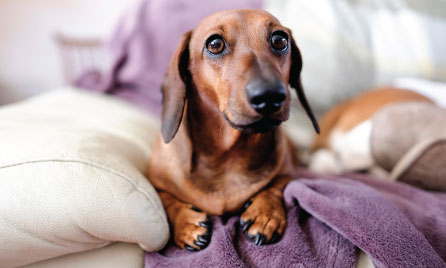
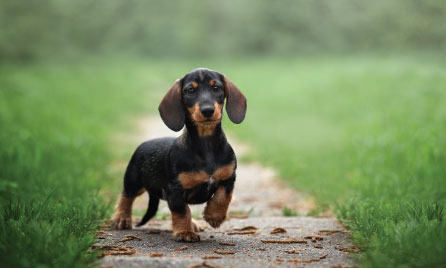
Dachshund dogs are best-known as sausage dogs. They have a pointed snout, a pair of droopy long ears on the sides, and very short legs compared to other dogs. There are generally three varieties of them, differing mostly in the texture of their coat. They can be smooth, wirehaired, or longhaired.

Dachshunds are sweet and protective for the most part. While originally bred to be active outdoors for hunting purposes, many changes have been made to them over the years. For instance, they’re now much smaller in size, but most keep their interest for digging.

If you want to know more about the sausage dog, read our breed guide to see if Dachshunds are the pet for you.

Dachshund breed information.

If you’d like to get to know the breed a little more closely, here are a few key traits and facts about the Dachshund:

How long do Dachshunds live?

Small dogs are generally known to have a higher life expectancy than bigger dog breeds. Dachshunds are relatively small and are known to reach an age of 12 to 16 years on average.

How big do Dachshunds get?

Dachshunds, or sausage dogs, are typically categorized into two types: Miniature Dachshunds or Standard Daschunds.

Miniature Dachshunds can weigh up to 5kgs, while Standard Dachshunds can weigh between 7 and 15kgs.

Do Dachshunds shed?

Dachshunds don’t usually shed too much, especially shorter-haired Dachshunds. Longer-haired Dachshunds shed more noticeably, but not nearly as much as other dog breeds.

Should I get a Dachshund?

Dachshunds are generally homebodies but also enjoy doing outdoor activitives. It's important to socialise them early on so that they can get used to other people and other dogs.

Since they have typically longer backs, they are prone to injury on that part. Mishandling can potentially injure them. Make sure that your environment is relatively manageable for their small stature. You can use ramps or additional cushions in places where they might run or jump around.

Overall, they can be a great pet for homeowners without a huge house or yard. They usually can live comfortably in flats or apartments, as long as they get enough walks.

Should I get a Dachshund?

Set your dog up for success!

Finding the right dog trainer can make all the difference. Learn what to look for to ensure the best fit for your pup!

PetRescue

Dachshund personality.

Dachshunds are generally an intelligent breed. They have a prestigious hunting background, so it comes as no surprise that they are keen trackers and protective members of their pack when needed. And their braveness is only matched by their sweetness, so long as they’ve been properly socialised.

Taking care of a Dachshund.

Grooming.

Dachshunds tend to be low maintenance when it comes to grooming, especially those with shorter coats. Regular brushing can help remove any loose hairs.

Exercise.

Despite their tiny bodies, Dachshunds are an active dog breed and they love playtime. Regular walks can be very beneficial, especially if they don’t have a large yard space to run about in.

Diet.

Dry food can be a good fit as it helps keep their teeth clean. Dachshunds can easily become overweight, which causes major issues for their long, weak back. Make sure that you aren’t over-feeding your Dachshund, and have regular check-ups with your vet to help your dog stay at a healthy weight.

Common Dachshund health conditions.

Like most dog breeds, Dachshunds are susceptible to certain health conditions. Here are some examples:

Intervertebral disc disease (IVDD).

Unfortunately, their long back can develop spine problems, such as IVDD if they get injured from falling or jumping. It can also be caused by improper handling when carried. Make sure to always support Dachshund’s back and rear when holding them.

Intervertebral Disc Disease (IVDD)

Gastric dilatation-volvulus (GDV).

Also called bloat or torsion, this condition is usually observed in large dogs, but given their unnaturally large chest size for a small breed, Dachshunds can be prone to this, too. This happens when air is trapped in their tummies and causes “torsion” for your dog. When this happens, seek medical attention right away since this can be fatal. 

Gastric dilatation-volvulus (GDV)

The cost of insuring a Dachshund.

If you’re thinking about getting pet insurance for your Dachshund, factors like age and location could affect the cost of your premium. Everyday Pet Insurance offers cover with optional benefits to help protect you and your furry friend. Learn more about the benefits of Everyday Pet Insurance here.

Need Pet Insurance for your Dachshund?

Why pick Everyday Pet Insurance?

Choose your annual benefit limit up to $7.5k, $12.5k, $24k or $35k.#

Get up to 70%, 80% or 90% back on eligible vet bills.#


We process 90% of claims within just 1 day.»~


Claim on the spot & only pay the gap with GapOnly.®=
 

Related articles.

Important Information.

text

# Depending on your level of cover. Policy T&Cs, limits, exclusions, waiting periods and annual excess may apply.
text

>> Once all required claims documentation has been received.

Based on PetSure data February 2023 to January 2024.

text

= The gap is defined as the difference between the vet's invoice and the claim benefit under your policy. Policy terms and conditions apply. GapOnly® is only available at participating Vets. Please visit GapOnly® to search for GapOnly® enabled vets. GapOnly® is a trademark owned by PetSure (Australia) Pty Ltd (PetSure) (ABN 95 075 949 923, AFSL 420183).