









- text
-
° This offer is only available for policyholders who have a registered Everyday Rewards Card linked to their eligible active Everyday Insurance policy. This offer is limited to one in-store Woolworths Supermarket transaction up to $500, with a maximum saving of $50 per Everyday Rewards Card, per month, regardless of the number of Woolworths services you use. For full T&Cs click here.
Can Dogs Eat Raw Meat? Safe & Unsafe Meats for Your Dog
Practical tips to keep your pet safe.
Pet Insurance | 10 minute read | 05 August 2025
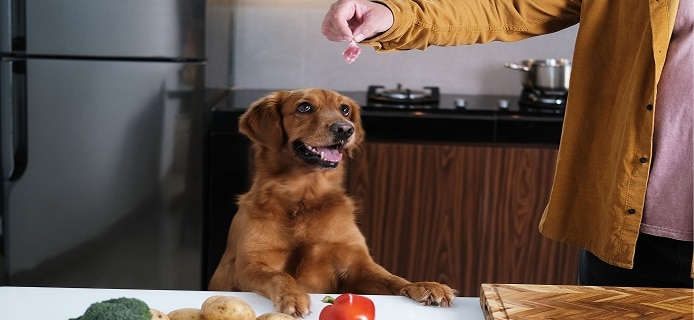
- Practical tips to keep your pet safe.
- Quick reference: What meats can your dog eat at a glance
- What meat can dogs eat?
- What meat can't dogs eat? Meats to avoid
- What to do if your dog eats something they shouldn't
- Everyday Pet Insurance can help with the moments that catch you off guard
- How Everyday Pet Insurance can help.
We all know that our beloved pups are meat eaters. But did you know that the latest proper term for them is “facultative carnivores”? It basically means dogs can survive by scavenging a range of food resources, but they need animal proteins and fats for optimal nutrition.
Luckily for your dog, they have a loving owner who feeds them well, so they don’t need to scavenge – but that won’t stop them from trying to steal bites off your plate if they get the chance. If there’s suddenly a piece of steak missing from your meal and your dog is looking guilty, don’t worry! It’s a very different (and much less dramatic) scenario than a missing grape or piece of chocolate.
Most types of meat are generally considered safe for dogs, whether they’re cooked or raw. In fact, raw feeding – giving dogs a diet based on raw meat, bones, and organs, including green tripe – is becoming a fairly mainstream approach to canine nutrition. Some vets might support raw feeding if it's done carefully, and with the right balance of nutrients.
Some meats can be more of a hazard than others, and how meat is prepared and served matters a lot. As a general rule, unseasoned raw and cooked meat can be safe for dogs, but seasoned cooked meat and processed meat might not be.
Here’s your full guide to safe and unsafe meats for your dog, to help you keep your favourite facultative carnivore happy, healthy and well-fed.
Quick reference: What meats can your dog eat at a glance
| Meat | Safe for dogs? | Key notes |
|---|---|---|
Raw chicken |
✅ Generally safe | A raw feeding staple. Use fresh, quality meat – freeze for 24–48 hrs first if preferred. |
Raw beef / mince |
✅ Generally safe | Considered one of the safest raw options. Human-grade, lean cuts are best. Avoid pre-seasoned mince. |
Lamb |
✅ Generally safe | Raw or cooked. Great for dogs with sensitivities to chicken or beef. |
Fish (cooked/frozen) |
✅ Generally safe | Cook or freeze first to eliminate parasites. Avoid Pacific salmon or trout served raw. |
| Prawns | ✅ Generally safe | Cooked only. Remove shell and tail. Skip the garlic butter or any other sauces or seasonings. |
Raw eggs |
✅ Generally safe | Nutritious in moderation. Shells are also fine and are a useful natural calcium source. |
Chicken necks (raw) |
✅ Generally safe | Raw only – never cooked. A great dental health aid. Soft enough for most dogs. |
Tuna (canned/cooked) |
✅ Generally safe | In moderation. Choose spring water, not brine or oil. Keep portions modest. |
Pork (cooked) |
⚠️ Caution | Cooked only. Raw pork carries a higher parasite risk than other meats. |
Beef jerky (commercial) |
⚠️ Caution | Many brands contain onion, garlic, or excess salt. Always check the ingredient list. |
| Bacon | 🚫 Best to Avoid | Very high in salt and saturated fat. Can trigger digestive upset and pancreatitis. |
| Ham | 🚫 Best to Avoid | Processed and high in sodium. Can cause vomiting and longer-term health problems. |
| Salami | 🚫 Best to Avoid | High in salt, fat, and often seasoned with garlic. Not suitable for dogs. |
| Cooked bones | 🚫 Best to Avoid | Cooked bones splinter and can cause internal injuries or blockages. Always avoid feeding with cooked bones. |
What meat can dogs eat?
Meat should form the foundation of any healthy dog diet, and there are plenty of great options, both raw and cooked. The following are all considered safer meats for dogs when prepared and served correctly.
Can dogs eat raw chicken?
Yes, and for many dogs on a raw diet, chicken is a staple. A dog's short, highly acidic digestive tract can be well-equipped to handle raw poultry, and the bacterial risks (like Salmonella and Campylobacter) that concern us as humans can be largely well-managed by a healthy dog's gut.
For extra peace of mind, use fresh, quality chicken and consider freezing it for 24 to 48 hours before serving – this reduces the bacterial load without affecting nutritional value. Chicken frames, wings, and necks (raw) are all great options, and the bones provide valuable minerals alongside genuine dental health benefits.
Important: raw chicken bones can be safe for dogs. Cooked chicken bones are not. More on that below.
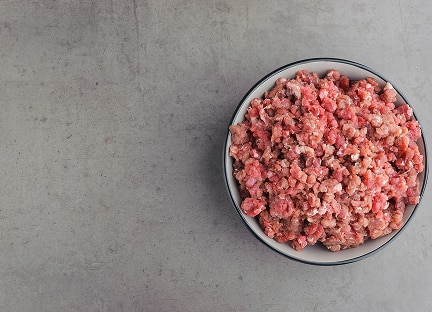
Can dogs eat raw mince and beef?
Raw beef, including mince, is generally safe and most widely fed raw meats for dogs. It's a rich source of protein, iron, zinc, and B vitamins, and most dogs are very enthusiastic about it. Lean cuts are preferable, and quality and freshness matter as with all raw meat. If you're feeding raw mince, opt for human-grade where possible and avoid pre-seasoned varieties entirely.
Can dogs eat lamb?
Yes. Lamb is generally safe for dogs either raw or cooked, and is a useful option for dogs with sensitivities or intolerances to more common proteins like chicken or beef. Raw lamb is a staple in many BARF (Biologically Appropriate Raw Food) diets, and raw lamb necks or ribs make great recreational bones with genuine dental benefits.
Can dogs eat fish and tuna?
Yes! Fish is an excellent addition to a dog's diet and a great source of omega-3 fatty acids, which support healthy skin, coat, joint mobility, and brain function. Cooked fish with no seasoning is the safest option; if serving raw, freeze it for at least 48 hours first to eliminate the parasite risk. One exception worth knowing: raw Pacific salmon and trout may not be safe for dogs. They can carry a parasite responsible for salmon poisoning disease in dogs – a serious, potentially fatal condition. This is usually only a concern in North America, but if you're unsure of a fish's origin, cook it or freeze it first. Canned tuna is fine for dogs in moderation; choose spring water over brine or oil, and keep portions modest given the mercury content in larger fish.
Can dogs eat prawns?
Cooked prawns are generally safe for dogs and quite nutritious – a good source of protein, phosphorus, and B vitamins. Always cook them before serving and remove the shell and tail, which can be a choking hazard. Raw prawns carry a higher risk of bacterial contamination than other meats, so stick to cooked.
Can dogs eat raw eggs?
Yes. Raw eggs are a nutritious and popular addition to a raw diet – an excellent source of protein, healthy fats, and vitamins A, D, and B12.
The often-cited concern about raw egg whites inhibiting biotin absorption is largely theoretical at normal quantities; one or two eggs a few times a week is considered low-risk for most healthy dogs.
Crushed or whole eggshells are also safe and a useful natural source of calcium – worth knowing if you're preparing a home raw diet without bones. And for a simpler option, boiled or scrambled eggs (no butter, salt, or seasoning) work just as well and most dogs love them as a food topper or occasional treat.
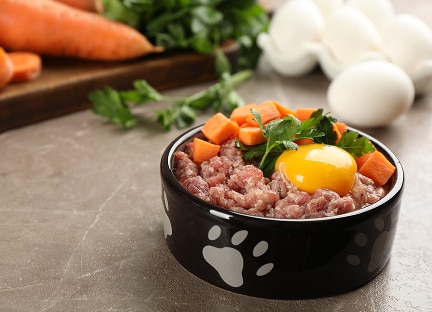
Can dogs eat chicken necks?
Raw chicken necks are usually a safe option for most dogs. They're soft enough for most dogs to chew safely, provide glucosamine and chondroitin to support joint health, and are widely recommended as a natural dental aid – the chewing action helps reduce plaque and tartar build-up. Many vets actively suggest them as part of a balanced raw diet. The rule here is the same as with all bones: raw only. Cooked chicken necks, or any cooked poultry bones, become brittle, splinter when chewed, and can cause lacerations to the mouth, throat, or digestive tract. Raw bones flex; cooked bones fracture. Stick to raw bones for your dog.
Is raw or cooked meat better for dogs?
The short answer is: it depends on the dog, the meat, and how it's managed. Raw feeding, done well, closely mirrors what dogs' digestive systems evolved to process. Dogs produce more stomach acid than humans and have a shorter gut transit time, which makes them naturally better equipped to handle raw meat safely. But well-formulated cooked or commercial diets can be just as nutritious. It all depends on your dog’s health and tastes, your own priorities and preferences, and your budget. Always check with your vet first about your dog's diet or a change in your dogs' diet.
What meat can't dogs eat? Meats to avoid
The list of genuinely problematic meats is pretty short – and mostly populated by processed products rather than whole meats. Here's what to keep off the menu for your dog.
Can dogs eat bacon?
Bacon is best avoided when it comes to dogs. It's extremely high in salt and saturated fat, both of which cause problems for dogs. Even a small amount can trigger digestive upset, and regular consumption increases the risk of pancreatitis – a painful and potentially serious condition. The occasional tiny piece is unlikely to cause lasting harm, but it's not a treat worth making a habit of.
Can dogs eat ham?
Ham is a processed meat with a high sodium content, and should be avoided. The salt load can cause excessive thirst, vomiting, and in larger quantities, sodium ion poisoning. As with bacon, it's the processing and curing that makes it unsuitable, and not the pork itself. Plain, cooked pork with no seasoning is a different matter (see below).
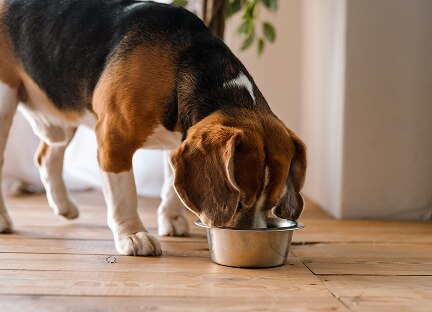
Can dogs eat pork?
Cooked, plain pork is generally safe for dogs in moderate amounts – a reasonable source of protein without the issues that come with processed pork products. Raw pork carries a higher parasite risk than other meats (including Trichinella spiralis), so it's worth cooking it through before serving. No seasoning, no marinades, and nothing from the charcuterie board.
Can dogs eat salami?
No. Salami is heavily processed, high in salt and fat, and typically seasoned with garlic and spices that are toxic to dogs. It's one to keep firmly off the menu, regardless of how persuasively your dog asks.
Can dogs eat beef jerky?
Proceed with caution. Plain, unseasoned jerky made specifically for dogs can be fine as an occasional treat. Commercial human-grade beef jerky, however, frequently contains onion powder, garlic, excess salt, and preservatives – all of which are harmful to dogs. Always check the ingredient list before sharing, and when in doubt, stick to jerky made specifically for dogs.
Can dogs eat cooked bones?
No – and this is one of the most important safety rules for dog owners. Never give your dog cooked bones of any kind. Cooking changes the structure of bone, making it brittle. Cooked bones splinter when chewed, creating sharp fragments that can lacerate the mouth, throat, or digestive tract, or cause an intestinal blockage that may require surgery. Raw bones are a completely different matter. Raw bones are pliable, break down more predictably, and are a valuable part of a balanced diet for many dogs. If you're offering bones, always make sure they're raw – and always supervise.
Can dogs eat cat food?
Cat food isn't toxic to dogs, but it's not a suitable substitute for a dog's regular diet. Cat food is formulated around cats' specific nutritional needs – it's significantly higher in protein and fat than dog food, and regular consumption can lead to weight gain and digestive upset. Cat food also usually contains added taurine, which dogs don’t need. An occasional mouthful when your dog beats you to the cat's bowl isn't a cause for alarm, but it's not something to encourage.
What to do if your dog eats something they shouldn't
If your dog has gotten into processed meats, cooked bones, or anything else they shouldn't have, it's worth acting quickly – especially if cooked bones or highly salted foods are involved.
Call your vet immediately
Your first call should always be to your vet.
Even if your dog seems fine, don't wait for symptoms to develop before seeking advice – some reactions, including those from processed meats with onion or garlic, take time to show. Your vet can assess the situation, advise whether you need to come in, and guide you through any steps to take at home.
If it's after hours, most vet clinics have an emergency line or can refer you to an after-hours animal hospital. Save this number somewhere easy to find before you need it.
All Everyday Pet Insurance customers get free† access to vet advice through VetAssist, available online 24/7. VetAssist connects you to licensed Australian vets via video or chat online. Access VetAssist via My Insurance Portal
Contact the Animal Poisons Helpline
If you can't reach your regular vet, the Animal Poisons Helpline is a 24/7 service that provides immediate guidance for pet owners across Australia. Have the following information ready before you call:
What your dog ate (and roughly how much)
When they ate it
Your dog's approximate weight and breed
Animal Poisons Helpline: 1300 869 738 (available 24/7)
Watch for warning signs
Even if your dog only ate a small amount, keep a close eye on them for at least 24–48 hours. Common signs that your dog may be having a reaction include:
Vomiting or diarrhoea
Choking or difficulty swallowing
Blood in their stool
Lethargy or unusal weakness
Abdominal pain, bloating, or discomfort
Excessive thirst (a potential sign of salt toxicity)
If any of these symptoms appear, seek veterinary care as soon as possible – the sooner treatment begins, the better the outcome.
| Warning sign | What it may indicate |
|---|---|
| Vomiting or diarrhoea | Common response to rich, fatty, or contaminated meat; seek vet advice if persistent. |
Choking or difficulty swallowing |
Possible bone fragment. Seek emergency vet care immediately. |
Blood in stool |
May indicate internal laceration from bone splinters. Contact your vet immediately. |
Lethargy or weakness |
Could indicate a toxic reaction or bacterial illness. Contact your vet immediately. |
Abdominal pain or bloating |
May indicate a blockage or gastrointestinal distress. Seek vet advice promptly. |
Excessive thirst or urination |
A potential sign of salt toxicity, particularly following processed meat ingestion.Seek vet advice promptly. |
Difficulty breathing |
Possible airway obstruction or allergic reaction. Seek emergency vet care immediately. |
Everyday Pet Insurance can help with the moments that catch you off guard
Even the most careful dog owner can be taken off guard by an unexpected event. Whether it's a stolen sausage, a sneaky raid on the cat's dinner, or an unsupervised moment with the bones bin – Everyday Pet Insurance can help protect against life's little mishaps. With a range of cover options to suit different dogs and budgets, there's a plan for every kind of dog owner. Plus, you can get 10% off an in-store Woolworths shop every month with Everyday Pet Insurance.°
Everyday Dog Insurance
Our Dog Insurance may cover accidents and illnesses. It can help when you go on adventures with your dog – both big and small – knowing you might be covered for when the unexpected happens.
Booster Care for your dog
With Everyday Booster Care, one of the things your pooch can be covered for is the scaling, polishing, dental x-rays and tooth removal that can be associated with common dental conditions such as Gingivitis, abscesses, cavities, disease and infection and more.v Learn about how your dog can be covered for dental and other extras as part of Everyday Booster Care.
Routine Care cover for your dog
Our Routine Care non-insurance benefit helps contribute towards everyday preventative health needs such as vaccinations and annual vet check-ups. This additional benefit is particularly handy if you have a new puppy join the family as it helps contribute towards the essentials like desexing, vaccination, microchipping, and even puppy obedience training.
How Everyday Pet Insurance can help.
Unexpected vet bills can be stressful. Pet Insurance can help cover the costs of diagnosis, treatment, and medication for various health conditions.
Depending on your level of cover. Policy T&Cs, limits, exclusions, waiting periods and annual excess may apply.
Here are some benefits you can enjoy with your Everyday Pet Insurance policy:
Other articles you might like
Help protect your loyal companion with Everyday Insurance and get 10% off an in-store Woolworths shop every month°
- text
-
† Offer available to new Everyday Pet Insurance policyholders, and is limited to 1 membership per eligible policy. The free membership offer (valued at $199p.a) is from the date of your policy commencement, provided your Everyday Pet Insurance policy remains active. You are not eligible to redeem the free membership subscription for cash or credit. VetAssist is a separate subscription based service to the Everyday Pet Insurance product, and is provided independently by Everyday Insurance third party service provider, VetChat Services Pty Ltd (VetChat). Click here for full VetAssist Service terms and conditions. Everyday Insurance reserves the right to vary or remove this offer at any time and will provide reasonable notice of any such changes.
- text
-
= The gap is defined as the difference between the vet's invoice and the claim benefit under your policy. Policy terms and conditions apply. GapOnly® is only available at participating Vets. Please visit GapOnly® to search for GapOnly® enabled vets. GapOnly® is a trademark owned by PetSure (Australia) Pty Ltd (PetSure) (ABN 95 075 949 923, AFSL 420183).
- text
-
** Offer is valid until 1 July 2027 (Offer Period). This entitles you to a 30% discount off the lowest online displayed price (excluding any items marked 'on sale' or 'on clearance') listed on www.petscripts.com.au for prescription medication purchase from PetScripts Pty Ltd ABN 73 610 444 427 (PetScripts) whilst your policy remains in force during the Offer Period and cannot be used in conjunction with any other offer or discount. This offer only applies to medication prescribed to the pet insured under Everyday Pet Insurance Policies. Services provided by PetScripts are separate to your pet insurance policy. Delivery fees may apply. The 30% discount offer is subject to PetScripts' general Terms and Conditions, including the Privacy Policy which are available online at www.petscripts.com.au. Woolworths reserves the right to vary, withdraw or extend this discount or an offer at any time. Woolworths will provide reasonable notice of any adverse changes.
- text
-
v Booster Care limit, applicable benefit percentage, waiting periods and exclusions apply. Annual excess may apply. See details in your PDS.
- text
-
The information provided in this article is general in nature and is intended for informational purposes only. It does not consider your personal objectives, financial situation, or needs, and should not be relied upon as personal or professional advice. Before making any decisions regarding your insurance or financial situation, we recommend you consider whether the information is appropriate to your circumstances and seek independent advice from a qualified professional. While we aim to keep this information accurate and up to date, Everyday Insurance makes no warranties or guarantees about the completeness, reliability, or accuracy of this content. Any reliance you place on this information is strictly at your own risk. Everyday Insurance from Woolworths, its employees, partners and contributors, to the extent permitted by the law, accept no liability for any loss or damage arising from the use of, or reliance on, this content. This article does not constitute financial, legal, veterinary, medical, or any other form of professional advice.
- text
-
Everyday Pet Insurance policies entered into for the first time prior to 17 July 2023 and subsequent renewals of those policies are issued by The Hollard Insurance Company Pty Ltd ABN 78 090 584 473, AFSL 241436 (Hollard), arranged and administered by PetSure (Australia) Pty Ltd ABN 95 075 949 923, AFSL 420183 (PetSure) and promoted and distributed by Hollard’s Authorised Representative (AR) Woolworths Group Limited ABN 88 000 014 675, AR 245476 (Woolworths).
Everyday Pet Insurance policies entered into for the first time on or after 17 July 2023 and subsequent renewals of those policies are issued by PetSure and promoted and distributed by PetSure’s AR, Woolworths.
Any advice provided is general only and does not take into account your individual objectives, financial situation or needs. Please consider the Product Disclosure Statement (PDS) to ensure this product meets your needs before purchasing, or choosing to continue with the product. PDS and Target Market Determination available at insurance.everyday.com.au/pet-insurance.
